How Prop TVs Ignite Immersive Experiences in Australian Furniture Showrooms
In Australia’s competitive showroom market, Prop TVs elevate furniture displays into immersive lifestyle experiences. Explore how YIJIA dummy TVs inspire design and staging success.

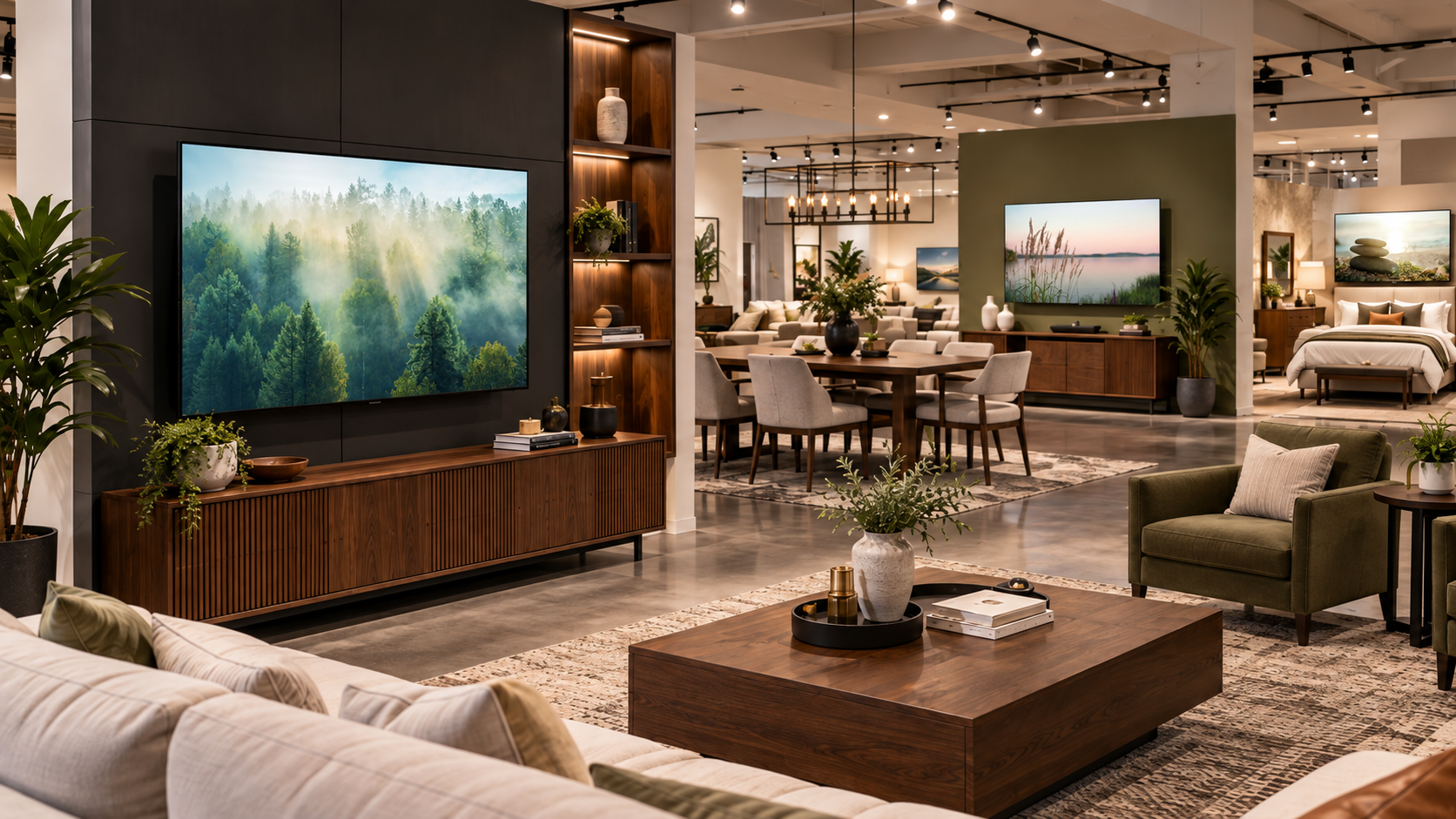
Australian furniture showrooms are designed to do more than display sofas, cabinets and dining tables. The most effective room settings help visitors imagine how furniture could become part of their everyday lives.
A well-planned television display can contribute to that experience.
For furniture retailers, visual merchandising teams and interior designers, non-functional Prop TVs provide the realistic appearance of a modern television without requiring electricity, cables, software or daily electronic maintenance.
Whether the project involves a Sydney furniture store, a Melbourne lifestyle showroom or a residential display suite in Brisbane, the objective is the same: create a convincing room setting while keeping the furniture at the centre of attention.
Why Prop TVs Work in Australian Furniture Showrooms
Furniture showrooms often bring several interior styles together under one roof.
A retailer may display compact apartment furniture alongside contemporary family living-room collections, modular sofas, entertainment units and premium media walls.
Each space requires a different visual balance.
A Prop TV helps establish the purpose of a living-room setting. It gives customers a familiar reference point while allowing the media cabinet, sofa arrangement, wall finishes and lighting to remain the main focus.
Unlike a working television, a non-functional display model does not require a power connection, remote control, streaming service or software configuration.
Its role is visual rather than electronic.
The screen artwork can also be selected to complement the surrounding furniture, creating a consistent presentation throughout a showroom.
1. Create Lifestyle-Led Living Room Displays
Effective visual merchandising is about helping customers understand how individual furniture products work together.
Imagine a contemporary coastal-inspired room setting featuring a neutral sofa, timber entertainment unit, textured rug and carefully selected accessories.
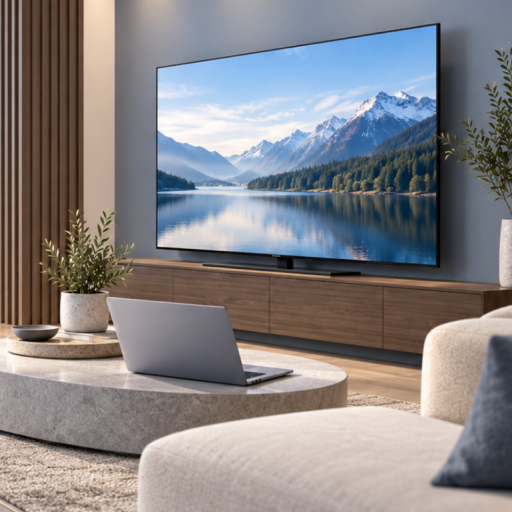
A realistic Prop TV with a static landscape image can complete this composition without introducing moving video or distracting screen content.
For a more architectural interior, a restrained abstract screen image may coordinate better with dark cabinetry, stone surfaces and contemporary lighting.
The important principle is simple: the television should support the room’s visual story rather than compete with the furniture.
For practical advice on screen proportions and furniture relationships, read our guide to balancing dummy TVs with furniture displays.
2. Choose the Right Prop TV Size for Each Showroom Setting
Not every Australian furniture showroom needs an oversized television.
Screen size should reflect the available wall area, media cabinet dimensions, furniture arrangement and viewing positions.
For an initial shortlist:
- 43–50 inches: compact apartments, smaller media cabinets and bedroom displays
- 55–65 inches: standard living rooms, sofa collections and everyday furniture settings
- 70–75 inches: larger living-room arrangements and premium entertainment units
- 85–98 inches: flagship room settings, wide feature walls and oversized media furniture
These ranges are design starting points, not fixed installation rules.
A 65-inch Prop TV, for example, can provide a realistic visual anchor in a medium-to-large living-room display without necessarily dominating the furniture arrangement.
Before selecting a size, use our Prop TV Size Guide to compare the approximate screen proportions and request actual product dimensions for installation planning.
3. Maintain a Consistent Screen Appearance
A showroom’s visual presentation should remain controlled throughout the day.
Working televisions can introduce changing screen content, menus, reflections, and operational requirements that may not contribute to the furniture display.
Non-functional Prop TVs offer a fixed visual presentation.
Depending on project requirements and available product configurations, screen artwork can be selected or customised around:
- Coastal and landscape imagery
- Contemporary architectural photography
- Minimalist abstract designs
- Seasonal furniture collections
- Coordinated colour palettes
- Property display themes
The artwork should be reviewed alongside the actual room lighting and furniture finishes.
A static display image is not intended to replace digital signage or demonstrate television functionality. It is a visual element designed to complete the interior setting.
4. Support Store Photography and Marketing Campaigns
Furniture retailers regularly need photographs for product catalogues, websites, social media and promotional campaigns.
The presentation of electronic props matters during this process.
A non-functional TV maintains the selected screen image without notifications, menus or changing video content.
This allows the photography team to plan the complete composition, including the sofa arrangement, entertainment unit, wall finishes and screen appearance.
Before photographing a display, review the screen surface for reflections and check the camera angle against the intended furniture focal point.
Explore our furniture showroom project gallery for visual references showing how display electronics can be integrated with complete room settings.
5. Standardise Prop TV Displays Across Multiple Australian Stores
For furniture businesses operating several stores, the challenge is often consistency rather than the selection of one television.
Different locations may have different floor areas, furniture collections and merchandising requirements.
Instead of purchasing display props independently for every store, Visual Merchandising and Store Planning teams can develop an approved Prop TV specification.
A practical rollout schedule can identify:
- Store name and location
- Room category and furniture collection
- Approved Prop TV size
- Required quantity per store
- Wall-mounted or tabletop configuration
- Screen artwork and finish
- Delivery destination and required date
For example, a retail group might approve smaller sizes for compact furniture displays, 65-inch models for core living-room settings, and larger formats for flagship installations.
A representative display should be reviewed before the specification is applied across multiple locations.
Explore our professional Prop TV collection to compare available models when preparing your showroom display schedule.
6. Plan Delivery and Installation for Australian Projects
For Australian retailers importing showroom display props, product selection is only one part of the procurement process.
The purchasing team should also confirm the delivery location, project schedule, packing requirements and preferred shipping arrangement.
For multi-store projects, clarify whether products will be delivered to a central warehouse or distributed to individual locations.
Before finalising an order, confirm:
- Exact model dimensions and quantities
- Product finish and approved screen artwork
- Mounting method and compatible hardware
- Packing dimensions and shipping requirements
- Australian delivery postcode and destination
- Required arrival or installation date
- Applicable import and delivery terms
These details help the supplier prepare a more useful quotation and allow the showroom team to plan installation.
For showroom concepts that connect living rooms with patios and outdoor-inspired furniture displays, explore our Australian Indoor–Outdoor Furniture Showroom Design Guide for practical zoning, prop selection and environmental considerations.
Frequently Asked Questions
Can Prop TVs play videos or television programmes?
No. YIJIA Prop TVs are non-functional display models. They are designed to reproduce the appearance of a television for staging and visual presentation, using static screen artwork rather than electronic video playback.
What size Prop TV works best in an Australian furniture showroom?
There is no single correct size. Compact displays may work with 43–50-inch models, while many living-room settings can accommodate 55–65-inch options. Larger walls and premium furniture arrangements may benefit from 75-inch or 85-inch models. Always verify the actual product dimensions.
Can one furniture retailer order different TV sizes for multiple stores?
Yes. Mixed-size project requirements can be discussed based on room types, quantities, finishes, and delivery destinations. Establishing an approved specification before wider deployment helps make the process more consistent.
Can the screen artwork be customised?
Custom screen graphics can be discussed according to the model and project requirements. Provide the preferred imagery or visual direction when requesting a quotation.
Plan Your Australian Furniture Showroom Display with YIJIA Props
A convincing furniture showroom does not depend on functional electronics. It depends on how well every visual element supports the surrounding furniture and the lifestyle being presented.
For Australian furniture retailers, interior designers and showroom planning teams, non-functional Prop TVs can provide a practical way to complete room settings while simplifying display operation.
YIJIA Props supplies professional Prop TVs for furniture showrooms, model homes, residential staging and multi-location display projects.
If you are planning a new showroom, updating existing furniture displays, or coordinating several retail locations, request an Australian showroom project quote.
Share your preferred TV sizes, quantities, store locations, mounting requirements, screen artwork preferences and delivery postcodes so we can review suitable products and supply arrangements.