Illuminating Furniture Showrooms with Design and Emotional Impact
Explore how prop TVs, dummy laptops and realistic display props help interior designers create emotional connections, balanced furniture arrangements and convincing showroom experiences.

A beautifully designed furniture showroom does more than present sofas, cabinets, and dining tables. It creates a setting where customers can imagine how those products might become part of their everyday lives.
The difference often lies in the details.
A realistic television above a media cabinet, a laptop on a thoughtfully styled desk or a tablet beside a contemporary seating arrangement can make an interior feel more complete.
These devices do not need to be functional to contribute to the visual experience.
For furniture retailers, interior designers and visual merchandising teams, non-functional display electronics offer a practical way to communicate lifestyle, proportion and atmosphere while keeping the furniture at the centre of attention.
1. Why Emotional Connection Matters in Furniture Showroom Design
Furniture purchasing is not only about dimensions, materials and price. Customers also consider how products might fit into their homes and daily routines.
A sofa can suggest a comfortable family living area. A dining table can establish a space for gathering. A media cabinet becomes more understandable when presented as part of a complete entertainment setting.
Visual details help communicate these possibilities.
A non-functional Prop TV provides a familiar reference point, allowing the customer to understand how a living-room collection could work in a residential environment.
Similarly, a dummy laptop can give a study desk a clear purpose without requiring a working computer.
The objective is not to fill the showroom with electronics. It is to select the right details to create a believable and cohesive interior.
2. Use Prop TVs to Create a Visual Focal Point
In a living-room display, the relationship between the sofa, media cabinet, television and wall is particularly important.
A well-proportioned Prop TV can complete this arrangement without drawing attention away from the furniture itself.
For example, consider a contemporary living-room display inspired by Italian interior design.
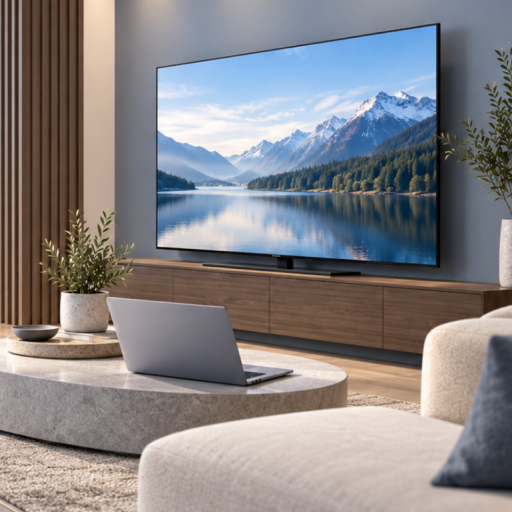
A modular sofa, low-profile media cabinet, textured wall finish and carefully selected lighting establish the overall composition. A realistic television with a static landscape image adds a familiar visual element.
The screen remains unchanged throughout the day, allowing the merchandising team to maintain the intended appearance.
The ideal television size depends on the space.
A compact apartment display may require a smaller model, while a spacious furniture setting may benefit from a larger screen.
Use our Prop TV Size Guide to compare suitable display proportions before confirming a model.
For further design considerations, read our guide to visual balance in furniture displays.
A convincing room setting should make the television feel naturally connected to the surrounding furniture.
3. Tell Different Lifestyle Stories with Dummy Electronics
Different furniture collections communicate different ways of living.
The same display electronics should not necessarily be used in every room.
The Contemporary Living Room
A Prop TV can provide a realistic entertainment reference for sofas, entertainment units, coffee tables and wall-mounted storage.
Choose screen artwork that complements the room’s materials and colour palette.
For minimalist interiors, subdued landscape or architectural imagery may work better than a highly saturated composition.
The Home Office or Study
A desk becomes easier to understand when presented with a few purposeful accessories.
A non-functional laptop can suggest a working or studying environment without requiring power, operating software or an internet connection.
YIJIA offers black, silver and white laptop props for different display styles.
Explore our dummy laptop models to compare suitable finishes for home offices, executive furniture settings and showroom study areas.
The Residential Display Suite
In a model apartment, realistic electronic props can help define the intended use of different spaces.
A Prop TV completes the living room, while a laptop can help establish a study corner.
The display should remain restrained so the architecture, furniture and materials continue to receive attention.
The Ceramic or Surface Materials Showroom
Ceramic and interior material displays can also benefit from carefully selected lifestyle details.
A tablet or phone-shaped display prop can suggest how the surrounding room might be used, provided its appearance suits the intended concept.
These are static presentation objects, not working smart-home devices.
The surrounding tiles, finishes, cabinetry and surface materials should remain the main focus.
4. Coordinate Colour, Lighting and Screen Artwork
Emotional impact in a showroom comes from the complete visual composition rather than from any single accessory.
Three elements deserve particular attention.
Colour Harmony
Screen artwork should complement the surrounding upholstery, timber, stone, wall finishes and decorative materials.
An image with restrained colours can create a more cohesive appearance than a highly saturated screen that competes with the furniture.
Lighting and Reflections
Evaluate the Prop TV under actual showroom lighting.
Overhead lights, nearby windows, and reflective materials can affect how the screen appears from different customer viewing positions.
Where suitable, consider a matte or reduced-reflection screen option and review the actual product finish before approval.
Visual Hierarchy
Customers should first understand the furniture collection and the lifestyle it communicates.
The display television, laptop or tablet should support that message rather than dominate the arrangement.
When reviewing the showroom, examine the display from the entrance, main customer walkway, and intended photography position.
The strongest compositions usually feel intentional without requiring every visual element to attract equal attention.
5. Move from Individual Props to Coordinated Room Settings
A professional showroom needs consistency between furniture, accessories, and electronic display props.
Instead of selecting each item independently, designers can build a simple room-setting specification.
For each display, record:
- Room type and design concept
- Main furniture collection
- Required display electronics
- Preferred device sizes and finishes
- Static screen artwork
- Wall-mounted or tabletop arrangements
- Reference photographs and viewing angles
- Quantity and delivery requirements
This approach helps design and purchasing teams communicate more clearly.
It is also useful for companies operating multiple showrooms, where similar room concepts may need to be reproduced in different locations.
Our European furniture showroom guide explains how consistent Prop TV specifications can support visual merchandising and multi-store purchasing.
6. Turn Design Inspiration into a Practical Showroom Plan
Creative ideas become more useful when they can be translated into product specifications.
Before selecting display props, the designer should review the actual furniture arrangement and identify where realistic electronic models would add value.
A practical process includes:
Step 1 — Define the room’s purpose. Identify the lifestyle or product category that the display should communicate.
Step 2 — Select the visual elements. Determine whether the space needs a Prop TV, dummy laptop, tablet, or another display accessory.
Step 3 — Check dimensions and materials. Compare device proportions, installation methods and finishes with the furniture.
Step 4 — Review the composition. Evaluate the complete room from customer and photography viewpoints.
Step 5 — Prepare the supply brief. Confirm required models, quantities, screen artwork, delivery destination and project timeline.
Explore our furniture showroom project gallery for visual references showing how display electronics can be coordinated with sofas, media cabinets, lighting and other interior materials.
7. Why Non-Functional Props Are Practical for Professional Displays
Realistic appearance is one reason to use Prop TVs and dummy electronics, but operational simplicity is another.
For applications where electronic functionality is unnecessary, non-functional models can avoid several requirements associated with working devices.
They do not need electrical connections, software configuration, charging, or streaming services.
Depending on the selected product, they may also offer practical advantages for moving, repositioning and preparing showroom displays.
The equipment should still be handled and installed according to its physical specifications.
For retailers, developers and designers, this creates an opportunity to focus resources on the complete room presentation rather than operating electronics that serve no essential display purpose.
Frequently Asked Questions
How can Prop TVs improve the atmosphere of a furniture showroom?
A Prop TV can complete a realistic living-room setting and help customers understand the relationship between the furniture, media cabinet and surrounding space. The effect depends on appropriate size, artwork, positioning and overall styling.
Can non-functional Prop TVs play movies or show changing images?
No. YIJIA Prop TVs are designed for static visual presentation. They cannot play movies, run applications, or display live television content.
Can dummy laptops and other display devices be used together?
Yes. Different non-functional props can be combined in a coordinated room concept, provided their appearance and proportions suit the furniture arrangement.
How should interior designers choose the right display models?
Start with the room dimensions, furniture layout, device proportions, finish, and intended photography or customer viewing positions. Confirm actual product specifications before ordering.
Can YIJIA support display requirements for multiple showroom locations?
Multi-location product requirements can be discussed using a schedule of approved models, quantities, finishes and delivery destinations. Product availability and shipping arrangements should be confirmed for each project.
Create More Meaningful Furniture Showrooms with YIJIA Props
An effective furniture showroom gives every item a purpose.
The sofa communicates comfort. The dining table suggests connection. The media cabinet establishes a place for entertainment. Carefully selected electronic display props complete the visual story.
At YIJIA Props, we believe non-functional realism can help designers create more convincing spaces without unnecessary electronic complexity.
We supply Prop TVs and other display electronics for furniture showrooms, model homes, interior design presentations, and professional staging projects.
Whether you are preparing a single showroom display, coordinating a residential project, or planning a consistent room-setting concept across multiple stores, we can review suitable products and supply requirements.
Request a showroom display quote with your project photos, preferred device models, quantities, finishes and delivery destination.