How to Stage a Model Home That Sells – Without Real Electronics (And Why It’s a Game-Changer for Your Sales)
Practical staging tips to create irresistible vibes in real estate and showroom projects. Learn how YIJIA dummy TVs elevate design and captivate buyers effortlessly.

Imagine this: A successful model home should help prospective buyers imagine what everyday life could look like inside the property.
The furniture, lighting, materials and finishing details all contribute to that experience. Electronics are part of the visual story, but they do not always need to be functional.
For property developers, home staging professionals and interior designers, non-functional prop TVs, dummy laptops and display devices offer a practical way to complete realistic room settings without introducing unnecessary electrical equipment.
Why Use Prop Electronics in a Model Home?
Model homes are designed to communicate space, lifestyle and potential.
A television helps define a living room. A laptop suggests how a study area could be used. A tablet on a side table can add a subtle everyday-life detail.
However, working electronics also introduce requirements that may not be necessary for a staged environment, including power connections, cable management, software configuration and ongoing operation.
Non-functional display models preserve the appearance of familiar devices while reducing these operational requirements.
They allow the staging team to concentrate on the furniture arrangement and the overall interior presentation.
1. Create a Complete Living Room with a Prop TV
The living room is often one of the most important spaces in a residential show home.
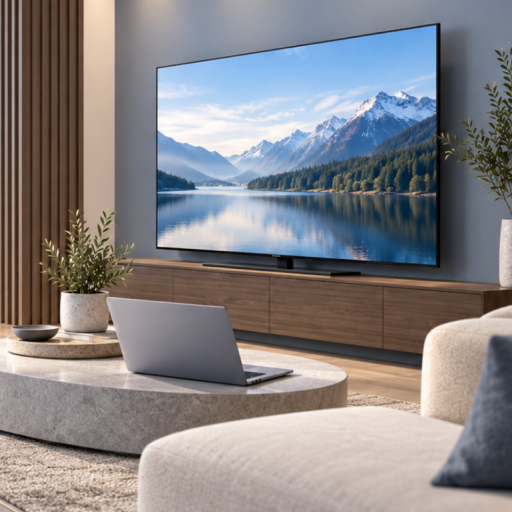
A realistic television display helps visitors understand the relationship between the seating arrangement, media cabinet, and feature wall.
The key is choosing the right proportions.
For compact apartments, a smaller display can support the furniture composition without overwhelming the room. Medium-sized living rooms may work well with a 55-inch prop TV, while more spacious settings may benefit from a 65-inch prop TV.
These are starting points rather than fixed design rules. Always compare the selected model’s overall dimensions with the actual wall and furniture.
For a practical size comparison, explore our Prop TV Size Guide before finalizing your display specification.
Consider the following details:
- Available wall width and media cabinet dimensions
- Position of the sofa and principal viewing angles
- Wall-mounted or tabletop installation
- Screen artwork and surrounding material finishes
- Lighting conditions and photography requirements
The objective is not to make the television dominate the room. It is to make the living room feel complete.
2. Stage a Home Office with a Dummy Laptop
A home office or study corner can help buyers understand the flexibility of a residential floor plan.
A desk, chair, lamp and laptop create a recognizable workspace without requiring complicated styling.
A non-functional laptop can provide this visual cue without software, charging or power connections.
Choose a finish that coordinates with the surrounding furniture. Silver, black, and white models can support different interior styles, depending on the desk surface, cabinetry, and accessories.
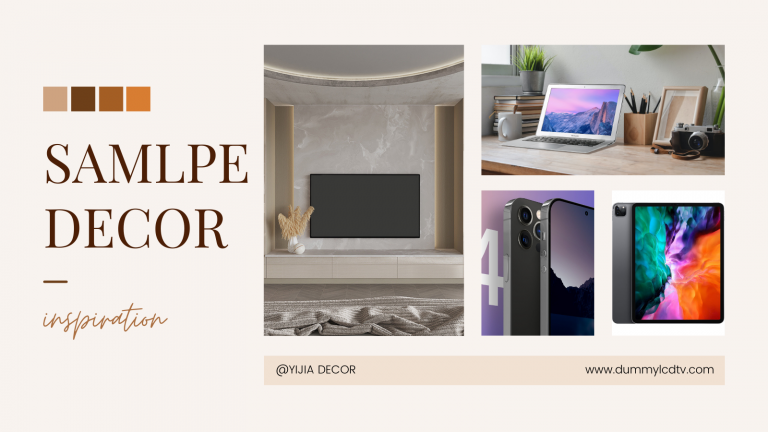
Explore our dummy laptop models to compare suitable finishes for residential staging.
Keep the arrangement simple. Leave enough desk space visible so the furniture remains the focus.
3. Add Realistic Details Without Visual Clutter
Thoughtful home staging is about communicating a believable lifestyle, not filling every surface with accessories.
In a bedroom, a compact television may support the intended design. In a study, a laptop can establish the room’s purpose. In a family living area, a carefully chosen display prop can complete the entertainment setting.
Avoid placing electronic props in every corner.
Instead, ask whether each item helps communicate how the room could be used.
Coordinate device finishes, screen imagery, furniture materials and decorative accessories so they feel like part of one considered design.
4. Prepare Model Homes for Property Photography
Model homes are frequently photographed for property marketing, residential sales presentations and developer websites.
A non-functional television can maintain a consistent visual appearance without live content changing between shots.
This allows the design and photography teams to plan the screen image alongside the room’s furniture, lighting and camera position.
Before photography, review the complete arrangement from the intended camera angles.
Check for unwanted reflections, distracting accessories and poor alignment between the television, cabinetry and surrounding architectural elements.
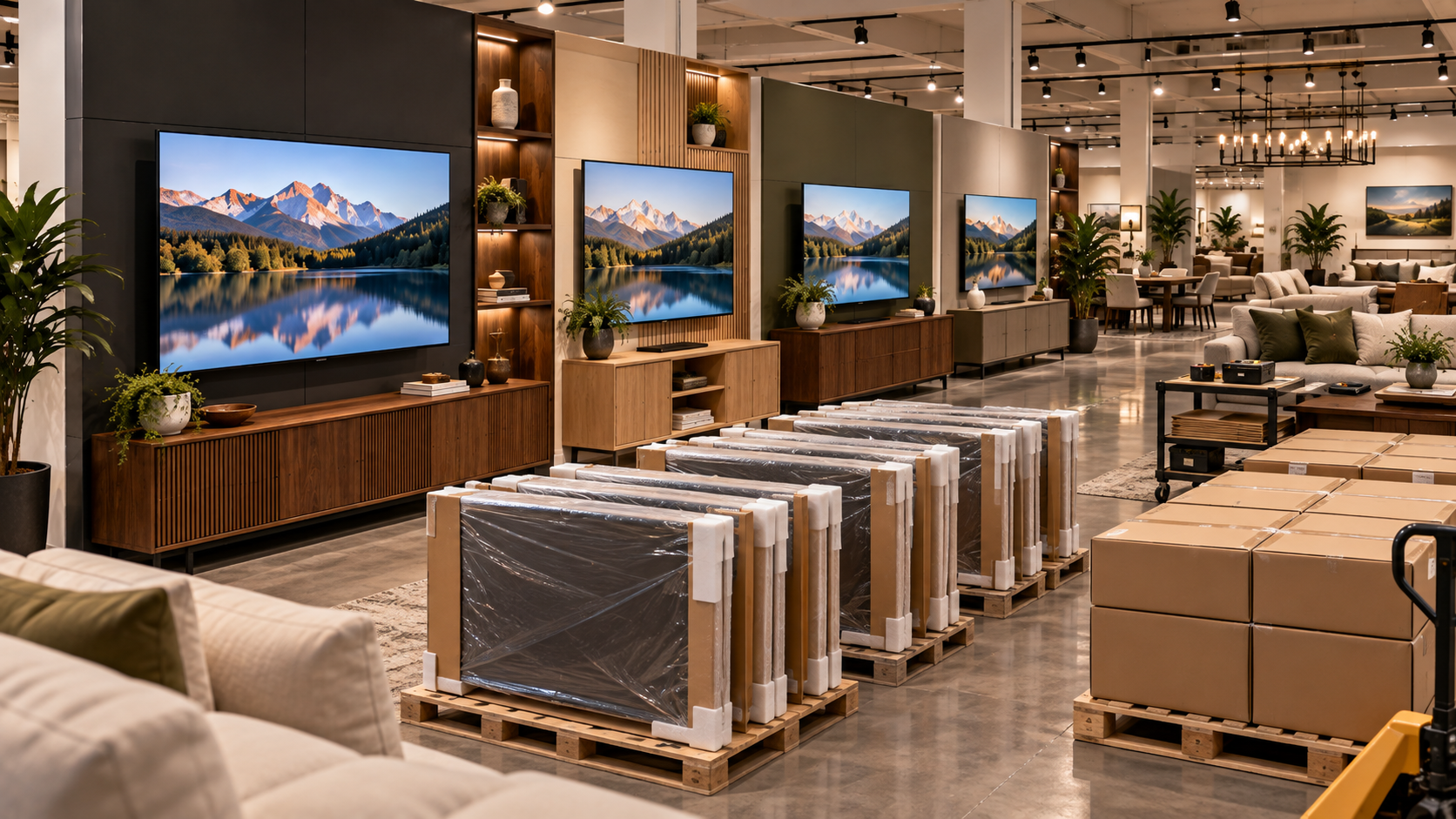
For additional room-setting inspiration, explore our furniture showroom project gallery.
5. Standardize Display Electronics Across Multiple Properties
Developers may need consistent staging arrangements across several model homes, apartment types, or residential developments.
Instead of selecting devices separately for every property, create a simple display schedule.
Record:
- Property or room type
- Proposed TV size and quantity
- Laptop or tablet model and finish
- Wall-mounted or tabletop requirements
- Screen artwork preferences
- Installation and photography dates
- Delivery destinations
Where several properties share a similar room layout, an approved display specification can make planning and purchasing more consistent.
For larger projects, review representative products and room settings before confirming the complete order.
Model Home Staging Checklist
Before ordering prop electronics for a residential staging project, confirm these five areas.
Room suitability: Does the proposed device complement the furniture proportions and available space?
Visual consistency: Do the screen artwork, device finish and surrounding materials work together?
Installation: Have the mounting method, support surface and required hardware been checked?
Project quantities: How many devices are required for each room type or property?
Delivery schedule: When must the products arrive, and where will they be received?
Preparing these details early helps connect the interior design concept with a practical procurement plan.
Plan Your Model Home Display with YIJIA Props
A successful model home creates a believable picture of everyday life. The right visual details can help visitors understand the purpose and character of each room.
YIJIA Props supplies non-functional television and electronic display models for furniture showrooms, model homes, interior staging, and professional display projects.
Whether you are completing one show apartment or preparing several residential sales environments, we can help review suitable display products and project supply requirements.
Request a model home staging quote with your room photos, preferred TV sizes, device quantities, display requirements, and delivery destination.