Igniting Home Dreams with Immersive Furniture Showroom Experiences
Learn how North American furniture retailers can create immersive showroom experiences with realistic room settings, non-functional prop TVs, lifestyle storytelling and repeatable visual merchandising standards.

A furniture showroom should do more than display beautiful products. It should help visitors imagine how those products might become part of their everyday lives.
A sofa becomes more meaningful when it is surrounded by a realistic living-room setting. A media cabinet feels more complete when paired with a television. A desk becomes easier to understand when it is presented as a welcoming home workspace.
These small details can change the way people experience furniture.
For furniture retailers, interior designers and visual merchandising teams across North America, immersive showroom design is about creating believable lifestyle environments rather than simply arranging products on the sales floor.
Non-functional Prop TVs and dummy electronics can play an important supporting role in this process.
They provide the familiar appearance of everyday devices without requiring power, operating software, or electronic maintenance.
The goal is not to make technology the centre of attention. It is to help customers picture a home they would enjoy living in.
1. Why Lifestyle Storytelling Matters in Furniture Showrooms
Customers rarely evaluate furniture in isolation.
They want to understand how a sofa might look in their living room, how a dining table could bring people together, or how a new media cabinet might complete their entertainment space.
A well-designed room setting provides that context.
Rather than presenting a collection of unrelated products, the showroom creates a visual story around a particular lifestyle.
That story might be about comfortable family evenings, compact urban living, a relaxing weekend at home or a sophisticated contemporary interior.
For retailers, this approach gives each furniture collection a clearer purpose and provides useful context for product discussions.
It also helps designers make decisions about lighting, accessories, display electronics and the visual relationship between individual pieces.
2. Create a Living Room That Feels Like Home
The living room is often one of the strongest opportunities for lifestyle storytelling.
A sofa, coffee table and entertainment unit can form a convincing composition, but the room may still feel incomplete without familiar everyday details.
A realistic Prop TV can help establish the intended function of the media wall.
Unlike a working television, a non-functional Prop TV uses static screen artwork. It does not play videos, run streaming services, or display changing content.
This allows designers to select imagery that coordinates with the furniture and maintain a consistent visual presentation.
Example A: A Contemporary Chicago Living Room
Imagine a furniture display inspired by a modern Chicago apartment.
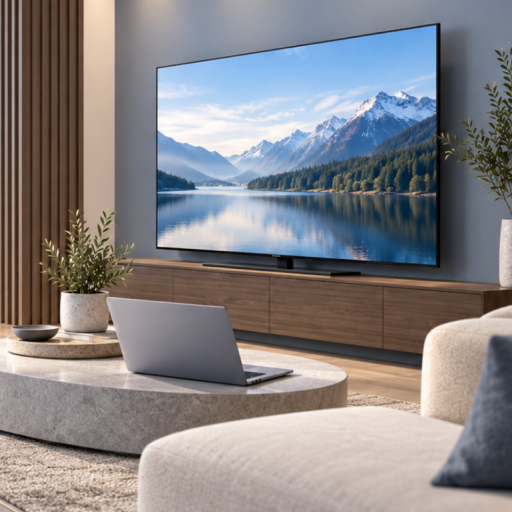
A comfortable sectional sofa, timber media cabinet, textured rug, and neutral wall treatment create an inviting living space.
A 65-inch Prop TV with understated landscape artwork completes the entertainment area without competing with the furniture.
The overall message is simple: this is a room where someone could relax after a busy day.
This is an illustrative design concept, not a documented customer installation.
Example B: A Premium Los Angeles Living Room
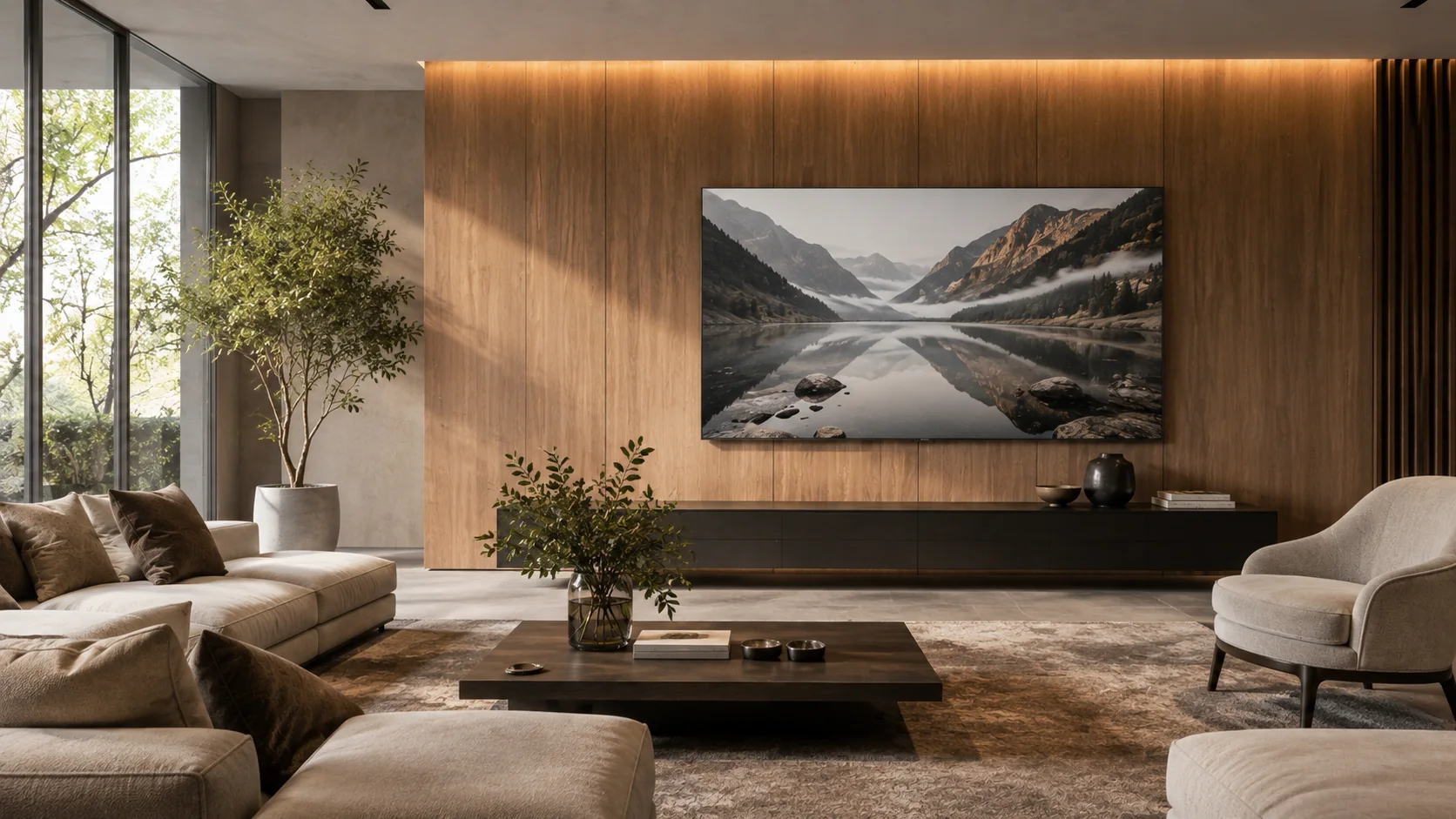
For a more spacious contemporary setting, consider a larger sofa arrangement, wide entertainment unit, and architectural media wall.
An 85-inch Prop TV can provide the scale required to support the broader furniture composition.
The larger display becomes a visual anchor while the sofa, cabinetry, lighting and decorative materials remain the primary products.
The best size depends on the actual wall dimensions and room layout.
Review our Prop TV Size Guide when comparing suitable display sizes for different showroom settings.
3. Design Room Settings Around Real Customer Lifestyles
A furniture showroom can communicate different lifestyles through thoughtfully planned room categories.
The Family Living Room
Use a comfortable sofa group, entertainment furniture, coordinated lighting and a realistic Prop TV.
Keep accessories restrained so customers can understand the scale, seating arrangement and practical use of the furniture.
The Urban Apartment
A compact room setting can help communicate efficient use of space.
Choose furniture with appropriate proportions and avoid oversized electronic props that dominate the visual composition.
A smaller television model may be sufficient to establish the entertainment area.
The Home Office
A desk, ergonomic chair, task lamp and non-functional laptop can communicate the purpose of a study corner.
A display laptop provides the appearance of a computer without requiring charging, operating software or an internet connection.
Explore our dummy laptop models when selecting finishes for home offices and study furniture displays.
The Premium Entertainment Room
A wide media wall, larger sofa arrangement and oversized Prop TV can create a stronger visual statement.
The screen artwork should remain compatible with the furniture finishes and architectural details.
For more advice on matching display proportions to the surrounding furniture, read our guide to visual balance in furniture displays.
Each setting should communicate a clear lifestyle without becoming overloaded with decorative accessories.
4. Guide the Customer Through a Complete Showroom Experience
An immersive showroom is not necessarily a high-tech or interactive showroom.
It can simply be a carefully planned sequence of convincing room settings.
Consider the customer’s experience in four stages.
First impression: A complete room setting immediately communicates the furniture collection’s intended lifestyle and design direction.
Room exploration: Visitors can observe how the sofa, media cabinet, storage furniture, and accessories work together.
Product evaluation: Customers can focus on dimensions, materials, finishes, and how individual pieces might fit into their own homes.
Purchase discussion: Sales teams can use the complete display to explain furniture combinations, available configurations and coordinated products.
The display props support this journey by making each room feel familiar and purposeful.
They are not intended to replace the furniture salesperson or demonstrate electronic functionality.
5. Use Static Display Electronics for Consistent Visual Presentation
Furniture showrooms often need to maintain a consistent appearance across long opening hours, photography sessions, and seasonal merchandising changes.
Functional televisions may introduce operating screens, visible cables, remote controls and changing digital content.
Non-functional Prop TVs avoid these electronic operating requirements.
They also allow the team to plan the screen image as part of the room’s colour palette.
Suitable static artwork may include:
- Landscape photography for relaxed residential interiors
- Minimalist abstract imagery for contemporary collections
- Architectural photography for premium media walls
- Nature-inspired images for neutral furniture settings
- Coordinated graphics for selected seasonal displays
Artwork should be selected with the room’s lighting, materials, and overall visual hierarchy in mind.
Before approving a display, review the screen appearance from the main customer walkway and intended photography positions.
Explore our furniture showroom project gallery for additional references on coordinating display electronics with complete interior settings.
6. Build a Repeatable Room-Setting Standard for Multiple Stores
For furniture groups with several locations, lifestyle storytelling becomes more valuable when the concept can be reproduced consistently.
A successful display in one showroom may need to be adapted for stores with different floor areas, furniture collections and layouts.
This is where a room-setting standard can help.
A retailer might establish several approved display concepts.
Compact Living: Smaller TV props, space-conscious furniture and restrained accessories.
Core Living: Medium-to-large TV props combined with standard living-room collections.
Premium Living: Larger display televisions, wide media cabinets and flagship furniture arrangements.
Each concept can include approved device sizes, finishes, screen artwork and placement guidelines.
Visual Merchandising, Store Planning and Procurement teams can then use a shared display schedule to coordinate implementation.
A practical schedule should record:
- Store name and location
- Room-setting category
- Furniture collection
- Approved Prop TV model
- Quantity required
- Screen artwork and finish
- Mounting or tabletop requirements
- Reference photographs
- Delivery destination and installation timeline
Before a broader rollout, review a representative room setting and confirm the proposed display specification.
Our showroom display solutions explain how non-functional electronics can support coordinated furniture displays and multi-location projects.
7. Connect Showroom Storytelling with Model Home Staging
The same principles used in furniture showrooms can also support residential property presentations.
A model home should help prospective buyers understand the purpose and scale of each room.
A television can complete a living-room arrangement, while a laptop can suggest a practical home-office setting.
The electronic props remain visual elements rather than working devices.
For property developers and staging professionals, the important consideration is whether the complete arrangement communicates a believable residential lifestyle.
Our model home staging guide explores how non-functional electronics can be incorporated into living rooms, study areas and other residential display spaces.
8. Turn a Lifestyle Concept into a Practical Display Brief
A successful showroom concept should be easy to communicate to the teams responsible for selecting, purchasing and installing the display products.
Before ordering, prepare a brief covering five key areas.
1. Room-setting objectives
Identify the customer lifestyle, furniture collection and room category that the display should communicate.
2. Product selection
List the required Prop TVs, dummy laptops and other relevant non-functional display models.
3. Visual specifications
Confirm device dimensions, finishes, static screen artwork and installation requirements.
4. Store quantities
Document the number of room settings and the required quantity of each product.
5. Delivery planning
Confirm the shipping destination, warehouse or store addresses, required delivery dates and project timetable.
These details help turn a creative presentation idea into a practical product specification and procurement request.
Frequently Asked Questions
What makes a furniture showroom experience immersive?
An immersive furniture showroom uses coordinated room settings to help visitors imagine a realistic lifestyle. Furniture, lighting, finishes, accessories, and display props work together to communicate how a room might be used.
Do immersive furniture showrooms need working televisions?
No. If the television is only required for visual staging, a non-functional Prop TV can provide the necessary appearance without electronic playback, power connections or operating software.
What Prop TV size works best for a furniture showroom?
The appropriate size depends on the room dimensions, furniture proportions and intended display concept. Smaller screens may suit compact apartments, while 65-inch and 85-inch models can be considered for larger living-room settings. Always confirm actual product dimensions.
Can furniture retailers use the same display concept across multiple stores?
Yes. A retailer can establish an approved room-setting specification and adapt it to different locations. Product sizes, screen artwork, finishes and installation requirements should be reviewed before wider deployment.
Can Prop TVs be used in model homes and residential sales environments?
Yes. Non-functional Prop TVs can support realistic room presentations in model homes, show apartments and professional home staging projects.
How can a furniture retailer request a display project quotation?
Prepare the intended room types, product sizes, quantities, preferred finishes, screen artwork requirements, delivery locations, and project timeline. Share these details with the supplier for a project-specific review.
Bring Your Furniture Showroom Story to Life with YIJIA Props
A compelling showroom experience begins with a simple idea: help customers imagine the life surrounding the furniture.
A well-proportioned Prop TV can complete a living room. A dummy laptop can give a home office a recognizable purpose. Carefully selected visual details can make an entire furniture collection feel more cohesive.
YIJIA Props supplies non-functional display electronics for furniture showrooms, model homes, interior design projects and professional staging applications.
Whether you are preparing a new furniture showroom, refreshing existing displays, or planning a multi-store presentation, we can review suitable products and project supply requirements.
Request a furniture showroom project quote with your room photos, preferred TV sizes, quantities, display requirements, and delivery destination.