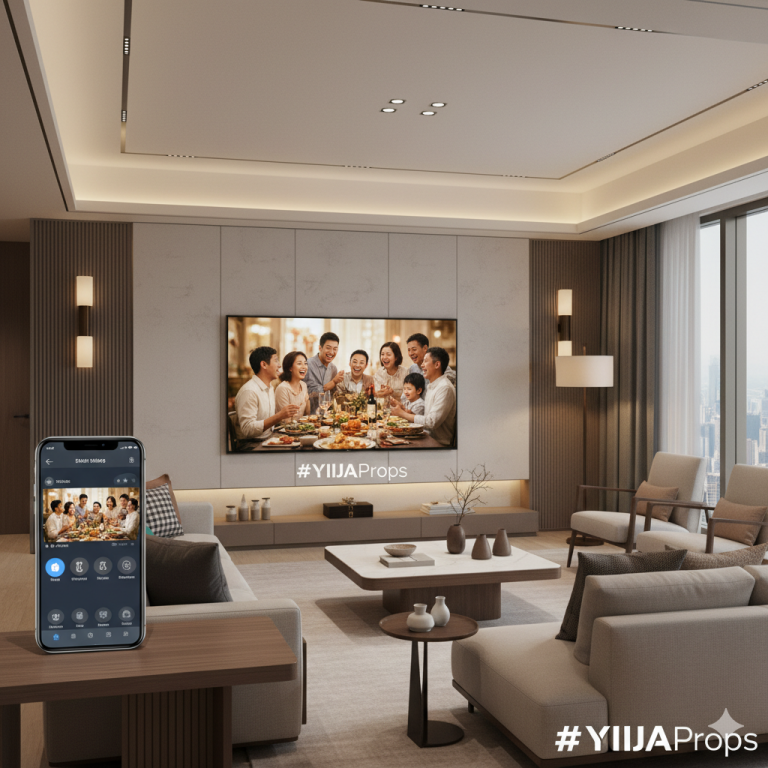
Furniture Showroom Visual Merchandising Checklist: Prop TV Selection & Rollout
Learn how to plan furniture showroom displays with realistic Prop TVs, consistent specifications, visual merchandising checklists and coordinated multi-store procurement workflows.

A successful furniture showroom does not happen by accident.
Behind every convincing room setting is a series of decisions about furniture proportions, lighting, accessories, customer sightlines and the final visual details.
For furniture retailers, visual merchandising teams and store planners, the challenge is not simply making one display look attractive. It is developing a presentation standard that can be evaluated, documented and repeated.
Non-functional Prop TVs can form part of that standard.
A realistic television completes a living-room display without requiring power connections, streaming services or electronic maintenance. When correctly specified, it supports the furniture arrangement rather than competing with it.
This furniture showroom visual merchandising checklist explains how to select display props, evaluate room settings, approve specifications and coordinate deployment across one or multiple retail locations.
1. Start with a Furniture Showroom Visual Merchandising Audit
Before selecting any electronic display props, evaluate the showroom layout and the furniture collections being presented.
The first question should not be, “Which TV size should we buy?”
It should be, “What does this room setting need to communicate?”
For each display, identify:
- Room type and intended lifestyle
- Primary furniture collection
- Available wall and furniture dimensions
- Main customer approach and viewing positions
- Lighting conditions and reflective surfaces
- Existing accessories and missing visual elements
- Installation restrictions
- Photography or merchandising requirements
For example, a living-room setting with a wide entertainment cabinet may benefit from a larger Prop TV, while a compact apartment display may require a more restrained size.
A bedroom furniture display may need no television at all.
The purpose of the audit is to determine where a visual prop adds meaning to the display.
2. Choose Prop TV Sizes Based on Furniture Proportions
In professional visual merchandising, display size should be selected in relation to the furniture and surrounding architecture.
An oversized television can make a compact media cabinet look disproportionately small. An undersized television can make a large feature wall feel unfinished.
For an initial review, consider the following size categories.
| Room Category | Prop TV Sizes to Consider | Display Application |
|---|---|---|
| Compact Living | 32–50 inches | Apartments, bedrooms and narrow media units |
| Core Living | 55–65 inches | Standard living rooms and sofa collections |
| Premium Living | 70–75 inches | Wide media cabinets and larger room settings |
| Flagship Display | 85–98 inches | Expansive media walls and premium furniture installations |
These are visual planning ranges, not fixed installation rules.
A 65-inch Prop TV may be a useful starting point for a medium-to-large living-room display, but its suitability depends on the actual room and furniture dimensions.
Use our Prop TV Size Guide to compare approximate screen proportions before approving a model.
Always confirm the selected product’s complete width, height, depth, stand footprint and mounting requirements before installation.
3. Evaluate Placement, Lighting and Screen Artwork
A Prop TV should be assessed within the complete showroom setting, not only through an isolated product photograph.
Three areas deserve particular attention.
Placement and Customer Sightlines
Review the proposed display from the showroom entrance, main aisle and principal seating position.
The television should create a convincing relationship with the media cabinet and surrounding furniture.
Avoid positions where the product obstructs customer movement, access to furniture or important architectural details.
Lighting and Reflections
Lighting affects how a display appears.
Windows, spotlights and surrounding reflective materials can create unwanted reflections on a television-shaped prop.
Review the selected screen surface under the actual showroom conditions.
Where available, discuss suitable reduced-reflection or matte screen options.
Static Screen Artwork
YIJIA Prop TVs are non-functional display models. They do not play videos, run software or display changing electronic content.
Their screen appearance is static.
Artwork may be selected or discussed for customisation according to the product and project requirements.
Choose imagery that complements the furniture collection, surrounding colours and overall design concept.
The screen should contribute to the room’s atmosphere without becoming the strongest visual distraction.
4. Create a Standard Display Specification
Once a room setting has been reviewed, record the approved display requirements.
This document becomes the reference for designers, purchasing teams, and store operations.
A useful Prop TV specification should contain:
Model information
- Approved product size and reference
- Overall product dimensions
- Frame appearance and finish
- Static screen artwork or approved visual reference
Installation information
- Wall-mounted or tabletop configuration
- Required mounting accessories
- Supporting wall or furniture conditions
- Placement and clearance requirements
Commercial information
- Quantity per room setting
- Number of displays or stores
- Delivery destination
- Required arrival date
- Sample approval requirements
Do not rely on a screen-size label alone. Two products with the same nominal diagonal size may differ in their overall dimensions, finish and installation configuration.
Explore our professional Prop TV collection when preparing your model shortlist.
5. Review a Representative Room Setting Before Bulk Approval
For larger showroom projects, approving a product photograph is not the same as approving the complete display.
A representative installation or sample review can help the team assess the final appearance.
The review should cover:
Visual realism: Does the product look appropriate for the furniture collection?
Proportion: Does the selected size complement the cabinet, seating, and wall dimensions?
Finish: Does the frame and screen appearance match the approved design direction?
Installation: Is the mounting or tabletop configuration suitable for the actual display?
Consistency: Can the specification be documented clearly enough for other locations?
Photography: Does the complete room look balanced from the intended camera positions?
Record approved photographs, model references, and any required changes.
Our furniture showroom project gallery provides additional visual references for evaluating coordinated furniture and electronic display arrangements.
6. Build a Repeatable Visual Merchandising Standard for Multiple Stores
A furniture retailer with several locations needs more than a collection of attractive individual displays.
It needs a consistent implementation process.
The first step is to group room settings into repeatable categories.
For example:
Compact Living
Apartment-inspired furniture settings with smaller media units and appropriately sized Prop TVs.
Core Living
Standard sofa collections and entertainment furniture using approved medium-to-large display models.
Premium Living
Larger furniture groupings with wider media cabinets and feature walls.
Flagship Display
Oversized room settings where large-format Prop TVs support the scale of the furniture presentation.
Each category can have an approved product shortlist, screen appearance, mounting configuration, and reference photograph.
Individual stores may need local adaptations based on floor space and furniture selection, but the overall merchandising standard remains consistent.
Our showroom display solutions explain how coordinated product specifications can support multi-store showroom planning.
7. Coordinate Procurement, Store Planning and Operations
A visual merchandising standard is most useful when different departments can work from the same approved specification.
The responsibilities should be clearly defined.
| Team | Main Responsibility |
|---|---|
| Visual Merchandising | Approve the intended appearance and room concept |
| Store Planning | Confirm dimensions, placement and installation conditions |
| Procurement | Confirm models, quantities, specifications and purchasing terms |
| Operations | Coordinate receiving, handling and deployment |
| Supplier | Review product availability, configuration, packing and delivery requirements |
This is a suggested coordination model rather than a fixed organisational structure.
For a multi-store project, the approved schedule should identify which products belong to each location.
It should also distinguish between products required for new stores, refurbishment projects and replacement displays.
Where deliveries are phased, document the required quantities and target dates for each phase.
A clear handoff reduces uncertainty and helps prevent inconsistent specifications between design approval and purchasing.
8. Prepare a Store-by-Store Prop TV Schedule
Before requesting a project quotation, consolidate the required products into one schedule.
For example:
| Store Type | Room Setting | Proposed Size | Quantity |
|---|---|---|---|
| Compact Store | Apartment Living | 50 inches | 2 |
| Standard Store | Core Living | 65 inches | 4 |
| Flagship Store | Premium Media Wall | 85 inches | 2 |
This table is illustrative only. It is not a fixed YIJIA package, minimum order quantity, or published quotation.
For an actual project, add the store address or warehouse destination, mounting requirements, approved screen artwork, and target installation date.
If different stores use different designs, record those variations clearly rather than assuming one specification applies everywhere.
A complete schedule allows the procurement team and supplier to review quantities, product configurations and delivery arrangements more efficiently.
9. Compare Supply Requirements Before Ordering
When selecting a supplier for a showroom display programme, product appearance is important, but it is only one part of the decision.
Buyers should also review:
- Model availability and size range
- Actual product dimensions and weight
- Screen artwork and finish options
- Installation configuration
- Sample availability
- Packing and handling requirements
- Production or preparation timeline
- Delivery locations and shipping terms
- Support for mixed-size project orders
Compare quotations using the same product requirements and delivery scope.
For more information about price drivers and international purchasing, read our Dummy TV Bulk Buying & Pricing Guide.
If you need help preparing the initial product list, use our Prop TV Quote Checklist for Showrooms to organise your quantities, configurations and delivery details.
10. Final Furniture Showroom Display Checklist
Before approving a Prop TV for a showroom, review the following questions.
Room Design
- Does the television complement the furniture proportions?
- Does the screen artwork support the intended room style?
- Has the display been reviewed from the customer walkway?
- Have reflections and lighting conditions been checked?
Product Specification
- Is the correct model reference recorded?
- Have the actual product dimensions been confirmed?
- Are the finish and screen artwork approved?
- Is the installation method suitable?
Multi-Store Consistency
- Is there an approved reference room setting?
- Are product specifications documented for repeated use?
- Have local showroom differences been identified?
- Is there a clear process for reviewing changes?
Procurement and Delivery
- Are quantities specified by model and location?
- Have sample requirements been confirmed?
- Are packing and shipping terms clear?
- Are target delivery and installation dates recorded?
A completed checklist connects the design concept to a practical purchasing decision.
Frequently Asked Questions
What is visual merchandising in a furniture showroom?
Visual merchandising is the planned presentation of furniture and related display elements to help customers understand the products, their proportions, and how they could be used in realistic interior settings.
Why use non-functional Prop TVs in furniture displays?
They provide the appearance of a television without electronic operation. This can be useful when the objective is visual staging rather than video playback or digital signage.
What Prop TV size should a furniture showroom choose?
The correct size depends on the wall area, furniture proportions, and intended display concept. Compare suitable size ranges and confirm actual model dimensions before ordering.
Can one display standard work across multiple stores?
A shared standard can be developed using approved room categories, product specifications and reference photographs. Individual stores may still require adjustments for local layouts and furniture collections.
Should procurement teams request samples before larger orders?
A representative sample or display review can be useful when appearance, finish, or installation compatibility needs approval before wider deployment. Availability and pricing should be confirmed for the selected model.
Can YIJIA support mixed-size showroom requirements?
Mixed-size requirements can be reviewed according to the requested models, quantities, finishes and delivery destinations. Final availability, pricing and supply arrangements are confirmed for the actual project.
Turn Your Visual Merchandising Plan into a Project Specification
Successful furniture showrooms depend on consistency between design decisions and operational execution.
A realistic Prop TV may be only one element of a room setting, but its size, placement, screen appearance and configuration can influence the entire furniture presentation.
For a retailer managing multiple locations, these details become even more important.
YIJIA Props supplies non-functional Prop TVs and display electronics for furniture showrooms, model homes and professional staging projects.
Whether you are planning a single new display, updating existing store layouts, or coordinating a multi-store furniture showroom rollout, our team can review suitable models and project supply requirements.
Request a furniture showroom project quote with your room photos, preferred TV sizes, quantities, installation methods, delivery locations and target project dates.