What Is a Dummy TV? A Complete Guide for Furniture Showrooms
Discover how non-functional dummy TVs use static screen artwork for furniture displays. Learn about image selection, surface finishes, lighting, customisation and multi-store visual standards.


A dummy TV is a non-functional television model designed to reproduce the appearance of a real TV for furniture showrooms, model homes, interior staging, and professional display environments.
Also called a Prop TV or fake TV, it provides a realistic television-shaped display without electronic video playback, software, or a power connection.
However, an important part of choosing a dummy TV is often overlooked: the static screen image and surface finish.
For furniture retailers and visual merchandising teams, these details can influence how a complete room setting appears under showroom lighting, alongside different furniture materials and in professional photography.
This guide explains how to select static screen artwork, compare display finishes, and prepare an approved visual specification for one showroom or multiple locations.
For a broader explanation of non-functional television models and their applications, begin with our complete Prop TV introduction.
1. What Is a Dummy TV Screen Display?
A professional dummy TV is not a working television with a paused image.
It is a physical display model with a static screen presentation.
The image is designed to provide the appearance of a television within a staged interior. It does not change electronically, play videos, or run applications.
This distinction is important for furniture showrooms.
A real TV may introduce changing content, menus, notifications, or standby screens during the day.
A non-functional dummy TV maintains its selected visual presentation without electronic operation.
That allows the design team to consider the screen image as part of the room’s overall composition.
The objective is not to demonstrate television technology. It is to support the appearance of the furniture setting.
2. Why Static Screen Artwork Matters in Furniture Showroom Design
A television often occupies a visually prominent position in a living room.
Even when the screen is not functional, the image can influence the appearance of the surrounding furniture.
Consider a neutral sofa, timber media cabinet and softly textured wall.
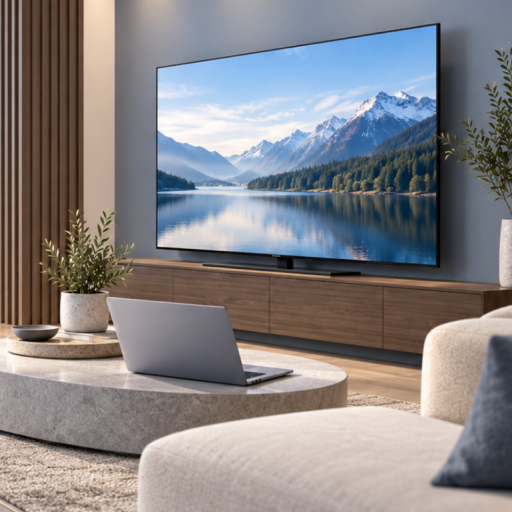
A restrained landscape image may complement the materials, while a bright, highly saturated graphic could draw attention away from the furniture collection.
Neither direction is automatically right or wrong.
The appropriate choice depends on the purpose of the display.
For professional visual merchandising, evaluate screen artwork using three principles.
Colour Harmony
Choose imagery that works with the upholstery, cabinetry, wall finishes and decorative materials.
The image does not need to reproduce the exact furniture colours. It should feel consistent with the intended visual direction.
Visual Hierarchy
The furniture should remain the main subject.
A static screen image can complete the entertainment setting without becoming the strongest competing visual element.
Room Identity
Different room settings communicate different lifestyles.
A compact apartment display, premium entertainment room, and contemporary bedroom may benefit from different screen images.
The artwork should support the purpose of each environment.
3. Choosing Artwork for Different Room Settings
A coordinated display programme does not necessarily require the same screen image in every room.
Instead, select artwork according to the intended setting.
Contemporary Living Rooms
Landscape photography, architectural imagery and restrained abstract compositions may suit modern sofas, media cabinets and modular furniture collections.
Consider the dominant furniture materials and the desired atmosphere.
Minimalist Interiors
Subdued graphics with limited visual complexity can help preserve a clean composition.
Avoid imagery that competes with carefully selected furniture details or architectural lines.
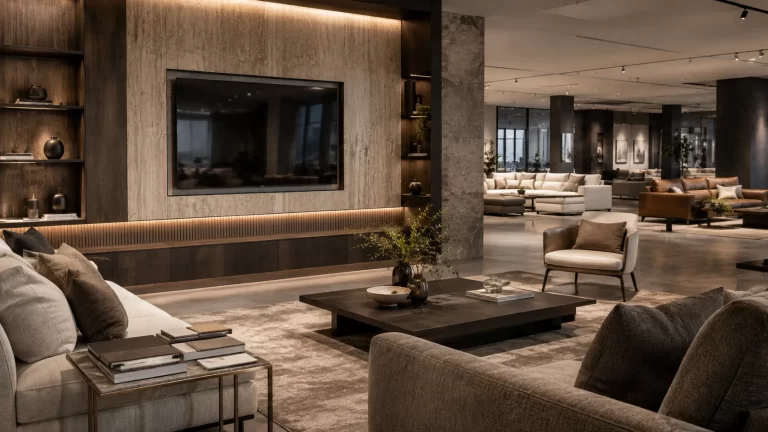
Premium Media Walls
A larger display can make the screen image more visually prominent.
Review the artwork at the intended physical scale and from the main customer viewing position.
An image that appears balanced on a small computer monitor may feel different on an 85-inch or 98-inch display.
Bedrooms and Compact Apartments
Smaller room settings often benefit from restrained imagery.
The television should complement the bed, cabinetry, or compact media furniture rather than make the room feel visually crowded.
For size planning, use our Prop TV Size Guide to compare display proportions before selecting the final model.
Seasonal Furniture Collections
Retailers may want screen images that complement different furniture campaigns or visual merchandising themes.
Because a dummy TV cannot change its artwork electronically, any physical artwork changes, alternative graphics, or replacement arrangements must be confirmed for the selected product.
4. Matte vs Glossy Dummy TV Screens
Surface finish is another important part of the visual specification.
Two dummy TVs with similar screen artwork may look different under the same showroom lighting because of their surfaces.
Matte or Reduced-Reflection Finishes
A matte or reduced-reflection presentation may help manage certain reflections caused by spotlights, windows and nearby surfaces.
This can be useful when a showroom requires a controlled static visual appearance.
However, matte does not mean completely reflection-free.
The result depends on the actual material, lighting conditions and viewing angle.
Glossy Finishes
A glossy surface can create a different visual impression that may suit some contemporary display concepts.
However, glossy surfaces can also make surrounding reflections more noticeable.
For highly illuminated retail environments or professional photography, this should be checked carefully.
Which Finish Should You Choose?
The correct choice depends on the intended display environment.
Before approval, compare:
- Actual showroom lighting
- Window positions and natural light
- Screen orientation
- Main customer viewing angles
- Intended photography positions
- Surrounding reflective materials
- The selected model’s available surface options
Do not assume that every size is available in every finish. Confirm the actual options with the supplier.
Explore our professional Prop TV range to shortlist suitable models for your room-setting requirements.
5. How to Prepare Custom Static Screen Artwork
For furniture brands with a consistent visual identity, custom artwork may be worth considering.
Instead of choosing unrelated screen images for every store, the visual merchandising team can define an approved image direction.
The first step is to prepare an artwork brief.
Define the Visual Objective
Explain the room category, furniture style and intended atmosphere.
Provide reference photographs showing the furniture, finishes and lighting.
Confirm the Selected Model
The artwork needs to be considered alongside the actual dummy TV model.
Confirm the size, visible image area and any model-specific production requirements.
Prepare Suitable Image Files
Ask the supplier which file formats, dimensions, colour requirements and production template are supported.
Do not assume that a generic 16:9 image file will automatically fit every model’s final visible area.
The image may need cropping or adjustment based on the physical product.
Check Image Rights
Use original artwork, licensed images or other materials you have permission to reproduce in commercial displays.
Do not submit protected brand graphics, film images or photographs for reproduction without the appropriate rights.
Review the Artwork Proof
Before production, confirm the final image, cropping, orientation, colour direction and selected model reference.
Where colour accuracy is important, discuss whether a physical proof or representative sample can be reviewed.
Any colour differences between computer monitors, printed materials and final product surfaces should be considered during approval.
6. Evaluate the Screen Under Actual Showroom Lighting
A static image should not be approved solely from a digital preview.
The complete room environment affects its appearance.
For a professional evaluation, consider three viewpoints.
Front View
Examine the image clarity, cropping, frame relationship, and overall composition.
Customer Approach
Review the display from the main aisle or entrance where visitors first encounter the room.
Photography View
Check the screen appearance from the intended camera position, paying attention to reflections and visual distractions.
If the television is wall-mounted, confirm that the final installation angle matches the approved room layout.
A display that looks appropriate in a product photograph may need adjustment when placed alongside actual furniture and lighting.
Our furniture showroom projects provide visual references showing televisions integrated with media cabinets, seating, and other interior elements.
7. Create a Screen Artwork Standard for Multiple Stores
For a furniture group operating several showrooms, consistency becomes a practical management issue.
Different stores may use similar furniture collections, but their lighting, floor plans and display sizes can vary.
An approved static screen artwork standard can help teams maintain a recognisable visual presentation.
The specification should include:
- Room-setting category
- Approved dummy TV model and size
- Artwork file or reference number
- Approved image composition
- Surface finish
- Display orientation and placement
- Reference room photograph
- Sample or artwork approval status
- Store or location requirements
For example, a retailer may approve one image family for compact living rooms and another for premium entertainment displays.
Individual stores can select from those approved options according to their layout.
The goal is visual consistency, not forcing every location to use an unsuitable identical image.
Our Furniture Showroom Visual Merchandising Checklist explains how product and display requirements can be documented for repeated use across different stores.
8. Review Artwork and Finish Before Bulk Ordering
When ordering multiple dummy TVs, the approved screen appearance should be treated as part of the product specification.
A representative sample or physical proof may be appropriate when the project requires repeated use of the same visual standard.
Before approving the bulk order, review the following.
Artwork Approval
Confirm that the image, cropping, and orientation match the intended display.
Finish Approval
Verify the frame appearance and available surface finish against the approved reference.
Lighting Review
Where practical, assess the representative model in a realistic room setting.
Model Identification
Record the approved product reference so that the correct artwork and finish are associated with the correct size.
Repeat Order Documentation
Save the approved specification, photographs, and relevant artwork references for future orders.
Packing and Delivery
Confirm packaging, quantities and destination details according to the actual project.
For additional product inspection criteria, read our Prop TV specification and quality guide.
A clear approval process helps the design, procurement and supplier teams work from the same visual requirements.
9. Questions to Ask Before Ordering a Dummy TV with Custom Artwork
Before requesting a project quotation, ask:
- Which dummy TV sizes are suitable for the intended furniture setting?
- Which screen surface options are available for the shortlisted models?
- Can the required static artwork be supplied for those configurations?
- What artwork file specifications are needed?
- Can a proof or representative sample be reviewed?
- How will the approved artwork be identified for repeat orders?
- Can different sizes use coordinated artwork?
- What are the quantities and delivery requirements?
- Are any artwork preparation or customisation charges applicable?
- What details must be approved before production?
These questions help distinguish a general product enquiry from a clearly specified showroom project.
Frequently Asked Questions
Is a dummy TV a working television?
No. A dummy TV is a non-functional display model. It is used for visual staging and does not provide electronic television viewing.
Can a dummy TV play video or change images automatically?
No. YIJIA dummy TVs use static screen presentations. They cannot play video, display digital advertising or switch content electronically.
Can I customise the screen image?
Custom static artwork can be discussed according to the selected model, production method and project requirements. The supported options should be confirmed before ordering.
Is a matte dummy TV completely anti-glare?
No. A matte or reduced-reflection surface may help reduce certain visible reflections, but it cannot guarantee a reflection-free appearance in every lighting environment.
Can the same image be used on 55-inch, 65-inch and 75-inch models?
A coordinated artwork concept may be used across multiple sizes, subject to image area, cropping, model configuration and supplier approval.
Can I replace the artwork after installation?
Do not assume that the image can be replaced by the user. The available physical artwork or replacement options depend on the selected product and construction.
What is the difference between a dummy TV and a Prop TV?
In furniture showroom staging, the terms are often used interchangeably to describe non-functional television display models. Individual suppliers may use different naming conventions, so always confirm the actual product specifications.
Should I approve artwork before ordering dummy TVs for multiple stores?
A documented artwork specification or representative sample review can be valuable when several locations need a consistent visual presentation.
Plan Your Dummy TV Screen Artwork with YIJIA Props
A convincing furniture display depends on the relationship between the products, materials, lighting, and visual details.
The dummy TV’s static screen image should be part of that planning process.
At YIJIA Props, we supply non-functional television display models for furniture showrooms, model homes, interior staging and professional display projects.
Our product discussions can include model sizes, suitable finishes, static screen artwork requirements, installation configurations, and project quantities.
Whether you are selecting one model for a new furniture display or coordinating an approved visual specification across multiple stores, we can review your requirements.
Request a dummy TV artwork and project quote with your preferred TV sizes, quantities, artwork references, finish requirements, room photographs and delivery destination.
A clear visual specification is the foundation of a consistent showroom display.