Why Prop TVs Are Essential in European Furniture Showrooms
Explore how European furniture retailers use non-functional prop TVs to create realistic living-room displays, standardise visual merchandising and coordinate supply across multiple showroom locations.


European furniture showrooms are increasingly expected to deliver more than a collection of individual products. A well-designed room setting needs to communicate proportion, atmosphere, and a believable lifestyle while keeping the furniture at the centre of attention.
For furniture retailers, interior designers and visual merchandising teams, a realistic television display can help complete that environment.
But the television does not always need to work.
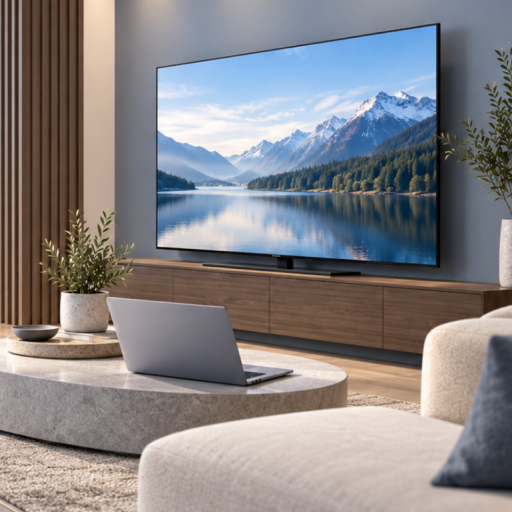
Non-functional Prop TVs provide the appearance of contemporary televisions without requiring power, cables, streaming services or electronic maintenance. They are designed specifically for furniture showrooms, model homes, retail displays and other professional staging environments.
For companies managing multiple showrooms across Europe, these display models can also become part of a repeatable visual merchandising strategy.
1. Complete the Room Without Distracting from the Furniture
In a furniture showroom, the products being sold are usually the sofa, media cabinet, shelving system, or complete living-room collection.
The television is a supporting element.
A carefully selected Prop TV helps customers understand how a media cabinet fits into everyday life. It establishes a familiar visual reference without drawing attention away from the furniture itself.
Consider three illustrative design approaches:
Milan – Contemporary Living-Room Design
A restrained TV display can complement a modular sofa, architectural shelving, and a carefully composed media wall. The objective is to maintain strong visual proportions while keeping the furniture collection as the focal point.
London – Residential Show Flat
A static television image can complete a staged living room without requiring a live television connection. The screen artwork should coordinate with the furniture, wall finishes and photography requirements.
Copenhagen – Scandinavian-Inspired Furniture Display
A minimalist Prop TV can support pale timber cabinetry, neutral upholstery and uncluttered styling. Its visual role is to complete the composition rather than dominate it.
These examples illustrate design possibilities, not claims about particular customer projects.
For a closer look at how screen proportions influence room composition, read our guide to visual balance in furniture displays.
2. Select Prop TV Sizes Based on the Room Setting
European furniture retailers often display a broad range of interior environments, from compact urban apartments to spacious premium living rooms.
Using the same television size in every setting can weaken the presentation.
Instead, choose sizes according to the wall dimensions, media cabinet proportions and intended customer viewing positions.
A practical starting point is:
- 32–50 inches: compact apartments, bedroom furniture and smaller media units
- 55–65 inches: standard living rooms, contemporary sofas and everyday furniture collections
- 70–75 inches: spacious living rooms, wider cabinets and premium media furniture
- 85–98 inches: flagship showrooms, oversized wall systems and large-format furniture displays
These are planning suggestions rather than universal rules.
A 65-inch Prop TV can provide a realistic visual anchor for many medium-to-large living-room arrangements.
For an expansive feature wall or flagship furniture installation, a 98-inch Prop TV may be more appropriate.
Before approving a model, review our Prop TV Size Guide and confirm the selected product’s overall dimensions, mounting configuration, and support requirements.
The correct size is not necessarily the largest available. It is the size that makes the furniture arrangement look complete.
3. Maintain a Consistent Visual Identity Across Showrooms
For a single independent showroom, the designer may select individual props for each display.
For a furniture group operating multiple stores, consistency becomes more important.
Visual Merchandising and Store Planning teams may need to reproduce a recognisable room-setting concept across different locations.
A repeatable Prop TV specification can help establish that consistency.
For example, a furniture retailer could develop an approved display standard for three room categories:
Compact Living: Smaller Prop TVs coordinated with apartment furniture and narrow media cabinets.
Core Living: Medium-to-large Prop TVs used with standard sofa and entertainment collections.
Premium Living: Larger-format display models selected for feature walls and flagship furniture settings.
Each room category can have an approved TV size range, screen artwork, finish, and installation approach.
Individual stores can then adapt the composition to their available floor space while maintaining a consistent overall presentation.
4. Support Multi-Store Furniture Showroom Rollouts
When a furniture company is opening, renovating, or updating several stores, the challenge is not simply purchasing display products.
The real challenge is deploying the right models consistently across different locations.
This requires coordination between Procurement, Visual Merchandising, Store Planning and Operations.
A practical multi-store display schedule should include:
- Store name and country
- Room category and furniture collection
- Approved Prop TV size
- Quantity required per location
- Screen artwork and finish
- Wall-mounted or tabletop configuration
- Required installation date
- Delivery address or central warehouse destination
A representative display should be reviewed before wider deployment.
For projects involving different store formats, the approved model list may include several TV sizes rather than one universal specification.
Our display solutions for multi-store showroom projects explain how furniture retailers can coordinate product selection, display specifications and supply requirements.
A standardised approach can simplify communication between design teams and purchasing departments while helping stores reproduce the intended showroom presentation.
5. Coordinate Screen Artwork with European Interior Concepts
Screen artwork is an important part of the overall display.
A static screen image can introduce colour, visual depth and atmosphere, even though the television itself has no electronic functionality.
The artwork should complement the surrounding furniture rather than compete with it.
Possible design directions include:
- Neutral landscapes for minimalist living rooms
- Architectural photography for contemporary interiors
- Restrained abstract compositions for premium furniture displays
- Nature-inspired imagery for calm residential settings
- Coordinated artwork across a multi-store furniture collection
For furniture brands with established visual merchandising guidelines, screen artwork can be reviewed alongside approved room-setting photography and material palettes.
Custom screen graphics may also be discussed according to the selected product and project requirements.
Our furniture showroom project gallery provides visual references for coordinating TV displays with media cabinets, seating, lighting and other interior elements.
6. Plan Procurement and Delivery Across European Markets
International showroom projects require careful coordination beyond product selection.
A retailer with locations in Germany, France, the Netherlands or other European markets may prefer centralised purchasing.
Another furniture group may require separate deliveries to individual stores or regional distribution centres.
For UK and EU destinations, import arrangements, customs procedures, VAT treatment and delivery responsibilities should be reviewed according to the destination and agreed shipping terms.
Before requesting a quotation, prepare:
- Preferred models and quantities
- Countries and final delivery locations
- Central warehouse or individual-store delivery requirements
- Preferred Incoterms, where applicable
- Packing and handling requirements
- Expected arrival or installation dates
- Any phased rollout schedule
DDP or other delivery arrangements should be confirmed in the quotation rather than assumed.
A clear project brief allows the supplier to evaluate suitable shipping options and provide more useful pricing and lead-time information.
7. What Should European Buyers Check Before Ordering?
A professional Prop TV supplier should be able to discuss more than appearance.
For larger furniture showroom projects, buyers should review five practical areas.
Product realism: Confirm the bezel appearance, finish, display proportions, and static screen presentation.
Installation compatibility: Check whether the selected model supports the intended wall-mounted or tabletop arrangement.
Visual consistency: Review artwork and product specifications before approving repeated showroom use.
Supply planning: Confirm the availability of required models, sample options, and expected production arrangements.
International delivery: Clarify quantities, packing requirements, destination and shipping terms.
The more clearly these requirements are defined, the easier it becomes to compare quotations and prepare a coordinated project.
Frequently Asked Questions
Can YIJIA Prop TVs play videos or display live content?
No. YIJIA Prop TVs are non-functional display models. Their purpose is visual staging with static screen artwork, not electronic playback or interactive demonstrations.
What Prop TV sizes are suitable for European furniture showrooms?
That depends on the room layout. Smaller displays can complement compact apartments or bedroom furniture, while 55–65-inch models can suit many living-room arrangements. Larger formats may work for wide media walls and premium showroom settings.
Can European furniture groups purchase different sizes for multiple stores?
Yes. A project can be discussed using a mixed-size schedule based on room types, store locations, product availability and required quantities.
Can screen images be customised?
Custom static screen artwork can be discussed according to the model and project requirements. Provide reference imagery or your intended visual direction when requesting a quotation.
What information is needed for a European project quotation?
Provide the required TV sizes, quantities, installation preferences, destination countries, delivery postcodes, and project timeline. For multi-store orders, include the number of locations and preferred distribution arrangement.
Plan Your European Furniture Showroom Project with YIJIA Props
A successful furniture showroom is built around a complete visual experience.
Non-functional Prop TVs help create realistic interiors while allowing furniture, materials, and design details to remain the centre of attention.
For furniture groups managing multiple locations, consistent product specifications can also support more efficient visual merchandising and procurement planning.
YIJIA Props supplies realistic display television models for furniture showrooms, model homes, interior staging and professional display environments.
Whether you are preparing a new showroom in Germany, refreshing furniture displays in France or coordinating a retail rollout across several markets, we can review suitable models and project supply requirements.
Request a European showroom project quote with your preferred TV sizes, quantities, store locations, screen artwork requirements and delivery details.