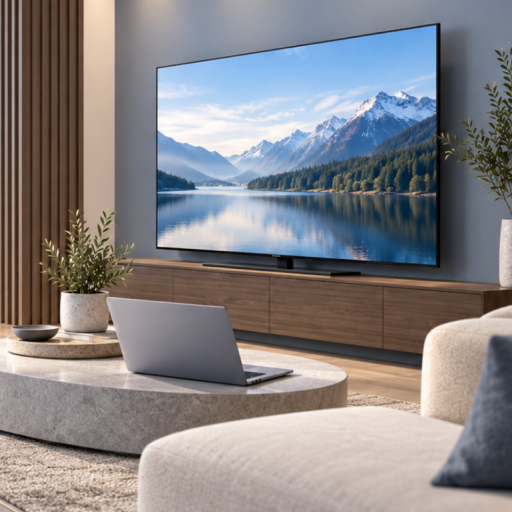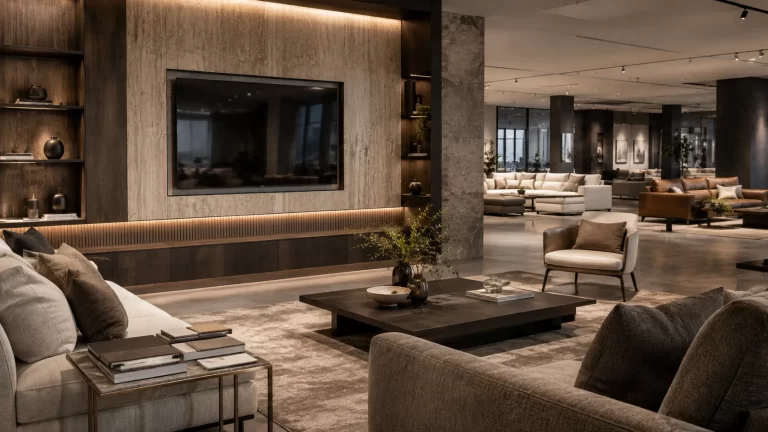
How to Choose Prop TV Models for Furniture Showrooms
A professional guide to selecting non-functional Prop TV models for furniture showrooms, including size, materials, screen finishes, mounting, sample approval and bulk quality checks.

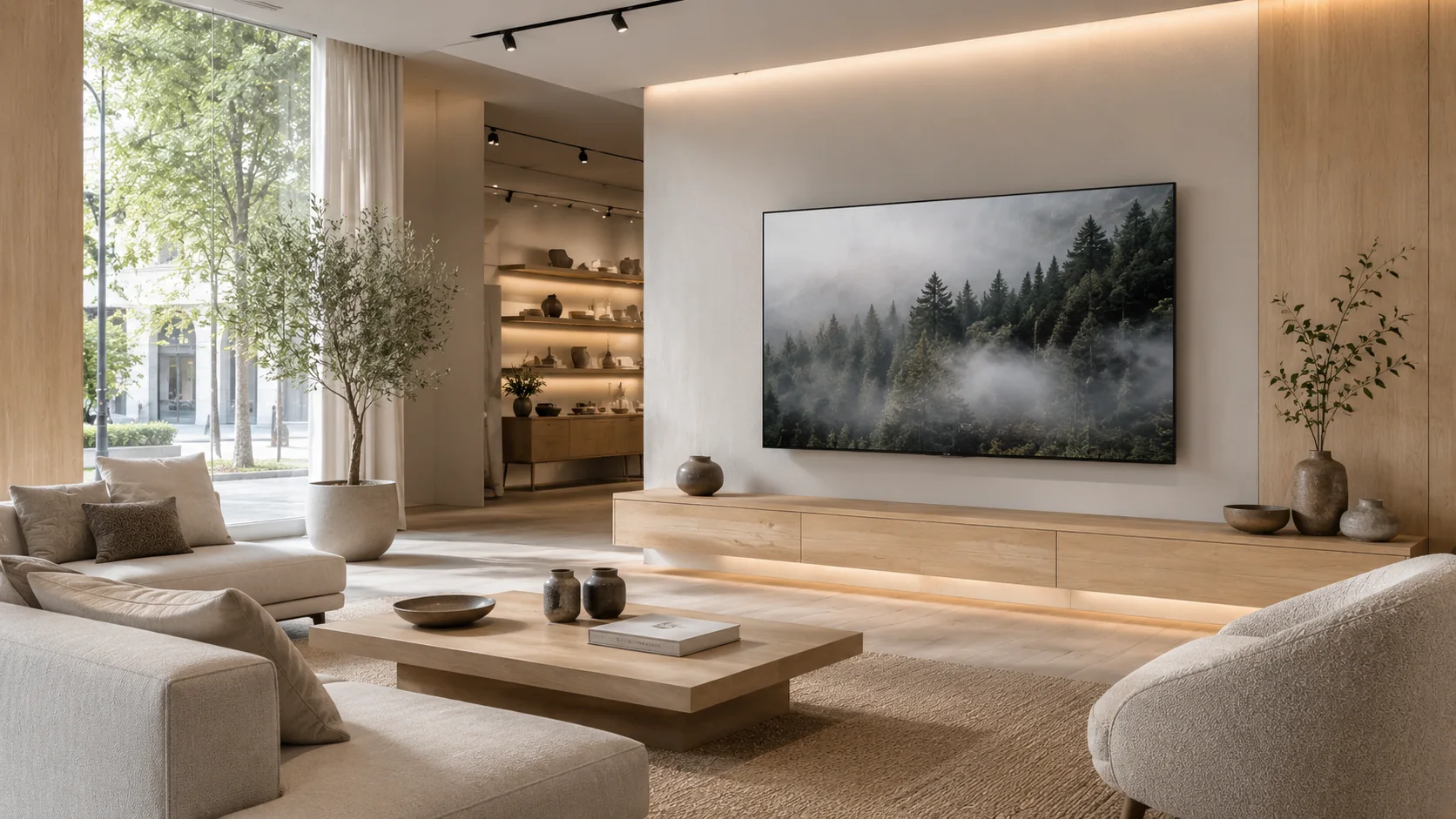
Choosing a Prop TV for a furniture showroom involves more than selecting a screen size and a realistic-looking frame.
Professional buyers also need to understand the product’s construction, overall dimensions, screen appearance, installation configuration, and consistency across multiple units.
A display that looks convincing in one product photograph may perform differently under showroom lighting, on a media cabinet or within a wall-mounted furniture setting.
For furniture retailers, property developers, interior designers and procurement teams, a structured selection process can help turn a visual concept into an approved product specification.
This guide explains how to evaluate non-functional Prop TV models, compare available configurations and prepare a practical quality checklist before placing a project order.
1. What Is a Professional Prop TV Model?
A Prop TV, also known as a dummy TV or non-functional television display, is a physical model designed to reproduce the appearance of a television.
Its purpose is visual staging rather than electronic operation.
Unlike a real television, a YIJIA Prop TV does not play video, connect to streaming services, or display changing digital content.
Instead, it uses a static screen presentation to support a carefully styled environment.
Typical applications include furniture showrooms, model homes, residential staging, photography, exhibitions, and selected film production settings.
A professional Prop TV should be evaluated according to its intended application, not simply its similarity to a consumer television.
For a broader comparison of the two product categories, read our Real TV vs Dummy TV comparison guide.
2. Start with the Right Prop TV Size
Screen size has a significant influence on the visual proportions of a furniture display.
A compact bedroom setting and a flagship living-room installation will rarely need the same television size.
For initial planning, consider the following categories.
| Display Environment | Prop TV Sizes to Consider |
|---|---|
| Compact bedrooms and apartments | 32–50 inches |
| Standard living rooms | 55–65 inches |
| Spacious living rooms | 70–75 inches |
| Flagship media walls | 85–98 inches |
These ranges are suggested starting points rather than universal design rules.
The final decision should be based on the actual media cabinet dimensions, available wall space, furniture proportions, and primary customer viewing positions.
A 75-inch television model, for example, may be suitable for a premium furniture showroom with a wide entertainment unit.
However, a 75-inch model can overwhelm a smaller display area if the surrounding furniture does not support its scale.
Review our Prop TV Size Guide to compare approximate screen proportions before selecting a model.
Remember that the advertised television size refers to the nominal screen diagonal. The complete product width, height, depth and stand dimensions may differ.
Always request the actual overall measurements of the selected product.
3. Examine the Frame, Construction and Materials
A professional display model should look appropriate from the angles customers are likely to see.
This includes more than the front screen.
When evaluating a Prop TV, examine:
Frame and bezel appearance
Check the frame width, corner details, colour consistency and the visual relationship between the bezel and static screen area.
Side profile
Review the thickness and side appearance, particularly when the model will be visible from an aisle or oblique viewing position.
Rear construction
Confirm whether the rear design provides the required support and attachment arrangement for the intended display method.
Materials
Ask the supplier to identify the actual frame, panel, backing and screen-surface materials used in the selected model.
Do not assume that every Prop TV is manufactured from the same combination of plastic, wood, foam or other materials.
Surface finish
Review paint, coating, decorative surfaces and visible edges for consistency and suitability for the intended room concept.
Handling characteristics
Request the actual weight and handling recommendations for the selected product.
A non-functional design does not automatically mean that every model is lightweight or suitable for one-person handling.
Material declarations and safety-related claims should be supported by the applicable product information or testing evidence.
4. Compare Matte and Glossy Screen Appearance
A static screen image can strongly influence how a Prop TV looks within a furniture showroom.
Two models of similar size may create different visual impressions because of their screen surfaces and artwork.
Matte or Reduced-Reflection Presentation
A matte or reduced-reflection surface may help control distracting reflections in certain showroom and photography conditions.
Its suitability depends on the actual material, lighting angle, and surrounding environment.
No screen surface should be assumed to be completely reflection-free.
Glossy Presentation
A glossy finish can create a different visual appearance that may suit certain contemporary display concepts.
However, reflections from windows, overhead lighting and nearby furniture surfaces should be evaluated carefully.
Choosing Static Screen Artwork
Screen imagery should coordinate with the surrounding furniture, materials and colour palette.
Possible directions include landscapes, architectural photography, restrained abstract artwork and coordinated campaign imagery.
Before approval, request a visual reference of the actual finish and proposed screen artwork.
If custom artwork is required, confirm the file specifications, reproduction method, approval process and any additional project requirements.
The screen artwork is a static visual element. It cannot be electronically changed like the content on a working television.
5. Confirm Wall-Mounted and Tabletop Configurations
Installation compatibility is one of the most important areas of professional Prop TV evaluation.
A product that is suitable for a tabletop arrangement may not necessarily be approved for wall mounting.
Wall-Mounted Displays
Before specifying wall installation, confirm:
- Whether the selected model supports wall mounting
- Approved attachment points and their dimensions
- Compatible brackets or mounting accessories
- Actual product weight
- Supporting wall construction and condition
- Required installation clearances
- Applicable installation and site safety requirements
Do not assume that the attachment points are compatible with a particular VESA bracket unless the supplier confirms this for the exact model.
The mounting hardware and supporting structure should be verified by an appropriately qualified installer.
Tabletop Displays
For a tabletop arrangement, verify:
- Available stand or base configuration
- Stand footprint and contact points
- Supporting furniture dimensions
- Stability under the intended display conditions
- Customer circulation and accidental-contact risks
Temporary exhibitions and public retail environments may require additional site-specific precautions.
Always follow the approved product and installation instructions.
6. Review Product Realism Under Actual Showroom Conditions
Studio product photographs are useful, but they cannot replace evaluation in the intended display environment.
The appearance of a Prop TV depends on the surrounding furniture and lighting.
Before approving a product, review it from at least three relevant positions.
Front view
Assess the screen proportions, frame finish, artwork and overall visual balance.
Side view
Check the model’s thickness, exposed edges and appearance when approached from the main showroom aisle.
Full-room view
Evaluate the relationship between the television, media cabinet, sofa arrangement, wall finishes, lighting and decorative accessories.
For photography projects, review the proposed camera angles and screen reflections.
Our furniture showroom project gallery provides visual references for evaluating display electronics within complete furniture arrangements.
The objective is not simply to make the Prop TV look convincing in isolation. It is to make the entire room setting look coherent.
7. Use a Sample Approval Checklist Before Bulk Ordering
For professional projects, a sample approval process can reduce uncertainty before wider purchasing.
The sample should be evaluated against a clearly documented specification.
A practical checklist includes the following areas.
Visual Inspection
- Does the frame match the approved appearance?
- Are the visible corners, edges and finishes consistent?
- Is the static screen artwork correct?
- Are there visible scratches, marks, or unwanted defects?
- Does the model look appropriate from the required viewing angles?
Dimensional Inspection
- Does the product correspond to the approved model reference?
- Have the overall width, height, and depth been checked?
- Does the stand or mounting configuration fit the intended space?
- Have any agreed dimensional acceptance criteria been reviewed?
Installation Inspection
- Are the required accessories present?
- Are the attachment points and support requirements documented?
- Is the proposed installation compatible with the site conditions?
- Have the relevant installer checks been completed?
Packaging Inspection
- Is the product adequately protected for its intended transport method?
- Are the carton labels and product references correct?
- Have packed dimensions and weight been recorded?
- Are handling instructions available where required?
Approval Decision
Record the result as:
Approved: The sample matches the agreed requirements.
Approved with Changes: Specific changes must be reviewed before further supply.
Not Approved: The product does not meet the required specification.
The evaluation should be documented through photographs, model references, and written comments.
Avoid relying only on informal verbal approval when the product will be repeated across several locations.
8. Turn an Approved Sample into a Repeatable Product Standard
For furniture retailers managing several stores, the next challenge is consistency.
A successful sample should become the reference for the wider display programme.
Create an approved product specification that identifies:
- Model reference and nominal size
- Overall product dimensions
- Approved construction and appearance
- Screen artwork and finish
- Wall-mounted or tabletop configuration
- Required accessories
- Packaging and handling information
- Reference photographs
- Applicable inspection criteria
Where different room settings require different TV sizes, create a separate specification for each approved model.
Visual Merchandising can confirm the appearance.
Store Planning can review placement and installation.
Procurement can confirm the approved reference and quantity schedule.
Operations can coordinate receiving, handling, and store deployment.
For a more detailed operational framework, read our Furniture Showroom Visual Merchandising Checklist.
A repeatable specification helps different teams work from the same requirements while allowing adjustments for individual store layouts.
9. Evaluate the Supplier Before Confirming a Project Order
Product approval and supplier evaluation should be connected.
Before placing a bulk order, procurement teams should confirm whether the supplier can discuss the practical requirements of the project.
Important questions include:
Product range
Are the required display sizes and configurations available?
Specification consistency
Can the agreed product reference and visual requirements be used for repeated orders?
Sample arrangements
Can a representative product be reviewed before the larger order?
Artwork options
Can suitable static screen artwork be selected or discussed for customisation?
Packing requirements
Can the supplier provide packed dimensions, weights and handling information for the selected models?
Mixed-size projects
Can quantities be reviewed across different TV sizes and display environments?
Delivery arrangements
Can the supplier discuss the destination, required timeline and applicable shipping terms?
After-delivery issues
What inspection, reporting and resolution process applies if goods arrive damaged or do not match the agreed specification?
Buyers should compare suppliers using the same product and commercial requirements.
For more information on quotation factors, quantities and international shipping, read our Dummy TV Bulk Buying & Pricing Guide.
10. Prepare a Final Prop TV Procurement Specification
Once the model and sample requirements are understood, consolidate the information into a clear purchasing brief.
The specification should include the following.
| Requirement | Information to Provide |
|---|---|
| Project application | Furniture showroom, model home, exhibition, or production |
| Product models | Required sizes and model references |
| Quantity | Units for each model and location |
| Appearance | Frame finish and static screen artwork |
| Dimensions | Approved overall measurements |
| Display method | Wall-mounted or tabletop |
| Accessories | Required stands, brackets or other approved items |
| Inspection | Sample status and agreed acceptance requirements |
| Packaging | Packing requirements and receiving conditions |
| Delivery | Destination, preferred terms and target arrival date |
For multi-store projects, attach a store-by-store quantity schedule.
If some specifications have not yet been finalised, identify them as items requiring supplier confirmation rather than making assumptions.
This allows the design concept, product approval and purchasing request to remain aligned.
Frequently Asked Questions
What materials are used to manufacture Prop TVs?
Materials depend on the model and construction. Buyers should request the actual frame, backing, and display-surface specifications rather than assume that all products are made from the same materials.
Are Prop TVs the same size as real televisions?
Nominal sizes refer to the screen diagonal, but overall product dimensions can vary. Always confirm the complete model measurements before installation.
Can a Prop TV be mounted on a wall?
Some models support wall-mounted configurations. The attachment points, compatible hardware, product weight, and supporting structure must be verified for the actual installation.
Is a matte Prop TV completely reflection-free?
No. Matte or reduced-reflection surfaces may help control certain reflections, but the visible result depends on the material, lighting, and viewing angle.
Can the screen image be changed electronically?
No. YIJIA Prop TVs are non-functional display products. Their screen artwork is static and does not support electronic content changes.
Should buyers approve a sample before a bulk order?
Sample review can be valuable when appearance, construction, mounting compatibility, or repeatability is important. The availability and commercial terms of a sample should be confirmed for the selected model.
Can different sizes be included in one showroom project?
Mixed-size requirements can be discussed according to model availability, approved specifications, quantities and delivery destinations.
What should be included in a Prop TV quality inspection?
Visual appearance, model dimensions, finish, screen artwork, mounting configuration, accessories and packaging should be checked against the agreed specification.
Choose Professional Prop TV Models with YIJIA Props
The right Prop TV is more than a realistic-looking display accessory.
It should fit the room, support the intended furniture presentation, meet the installation requirements and match the approved product specification.
For furniture retailers, model-home developers and visual merchandising teams, these details become especially important when the same display concept is repeated across multiple locations.
YIJIA Props supplies non-functional Prop TV models for professional showroom staging, residential display projects and commercial visual merchandising.
Whether you need one display model for a new room setting or a coordinated selection for multiple furniture stores, we can review suitable product configurations and project supply requirements.
Request a Prop TV specification and project quote with your preferred sizes, room photographs, quantities, mounting requirements, screen artwork preferences, and delivery destination.